
Domestic University Transfer
We will help you to find the university you "want to enter" without compromising the university you "get in" to. Through counseling and lectures, we help you clarify the research theme you want to study. Our unique method, which boasts a top-class track record in Japan, will help you enter a university that is one rank higher.
ABOUT
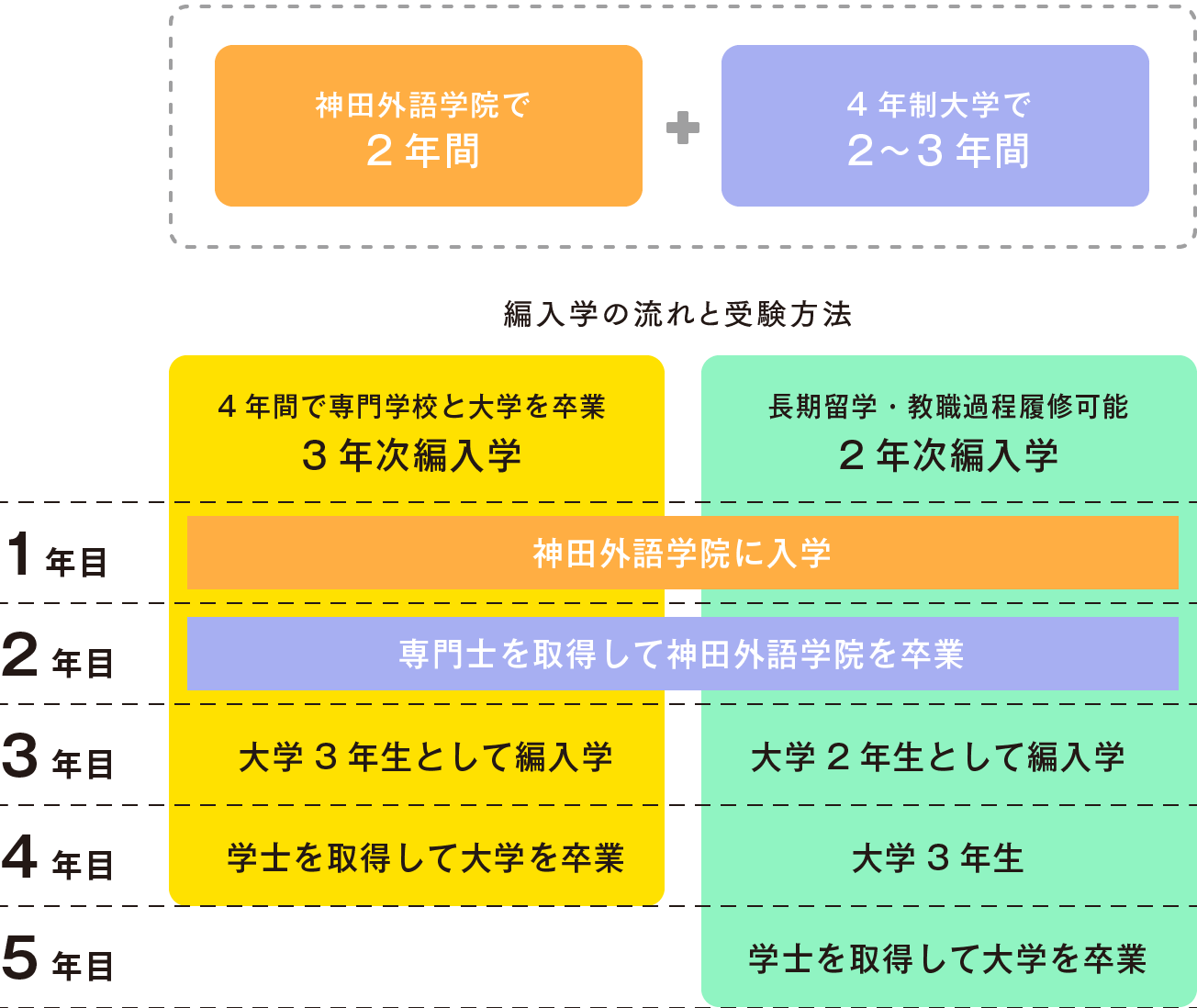
This is a system that allows graduates of vocational schools to enter the third or second year of a four-year university. Transfer students can enter either public or private universities, and study a variety of fields, including language, economics, business administration, international relations, and social studies. The transfer examination for most universities consists of English, a specialized subject (essay, etc.), and an interview, so you can take the exam with fewer subjects. If you improve your English at Kanda Institute of Languages and prepare well for the transfer examinations, it is not a dream to enter your target university that you have given up on or have taken the entrance examination but did not get a good result, or even a national or public university that you had given up on because you took the liberal arts entrance examination.
Do not compromise on the university you "get in" to, but transfer to the university you really "want to get in" to!
BENEFITS
Graduation from both technical school and university in 4 years
Don't worry: "I was not accepted by the university of my choice. If you are a ronin, you will be late to find a job or graduate from college..." There is no need to worry. By transferring to a university, you can graduate at the same time as students who have graduated from high school and are currently enrolled in a university.
Students can go to college after they have a clear idea of what they "really want to learn.
If you are unsure of what you want to study, transfer is the right choice for you. Through counseling and lectures, you can clarify the research theme you wish to study and then choose the university of your choice.
'Hey, maybe I'm better at English than the college students I'm transferring to?'
Kanda Institute of Languages offers an intensive curriculum that allows students to earn the equivalent of four years of university credits in just two years. Upon graduation from KGU, you will have English language skills and study habits that are second to none for transfer students.
REASONS
Many
lecturers are on staff to teach academic studies.
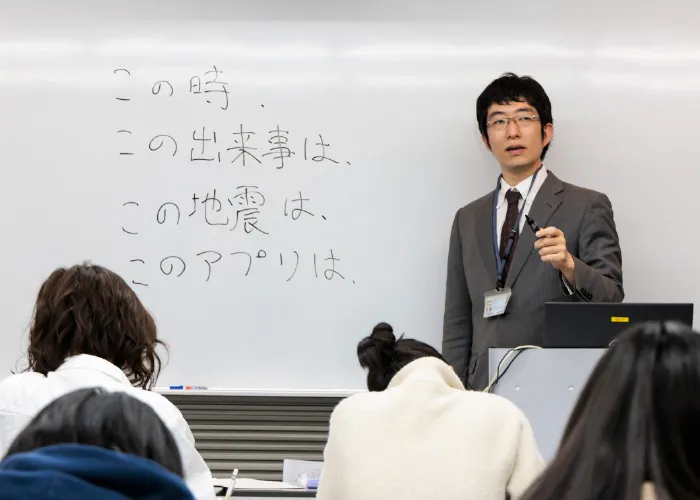
The transfer examination is a test of academic ability and expertise to keep up with lectures in the second or third year of university, and includes an essay and an interview.
Only Kanda Institute of Languages, where many experienced instructors are employed, can provide specialized instruction for each academic discipline.
-
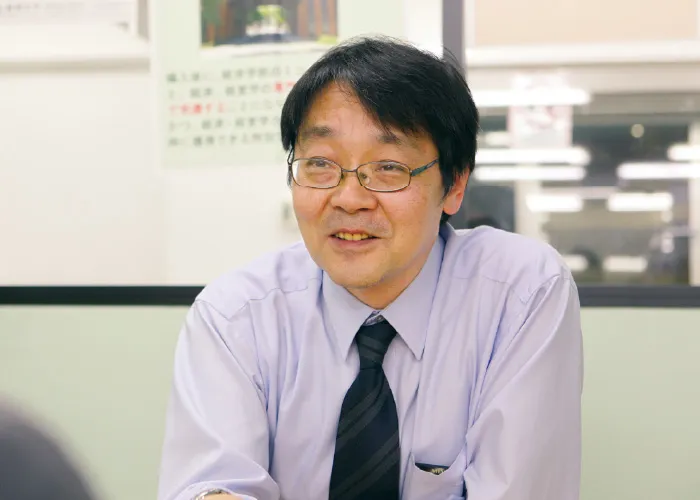
Dr. Daisuke Tsujioka
[Area of Expertise]
Law, Political Science, International Relations, Economics -

Dr. Mikuni Honda
[Area of Expertise]
English Pedagogy, English Exam Preparation -
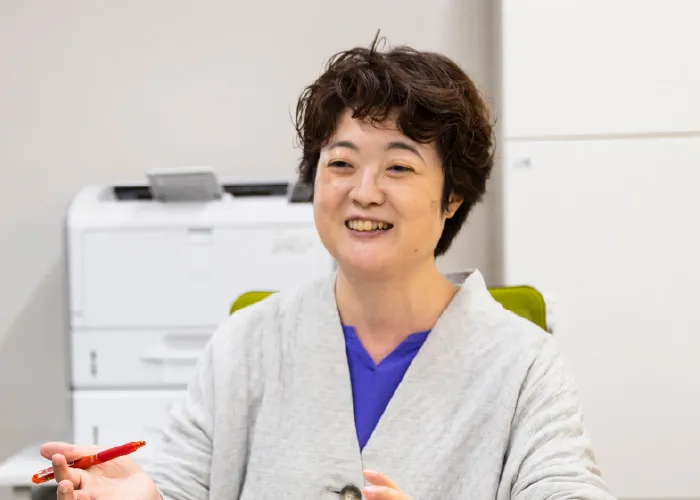
Dr. Mikako Kondo
[Specialty]
Essay writing preparation, statement of purpose preparation, science university transfer guidance -
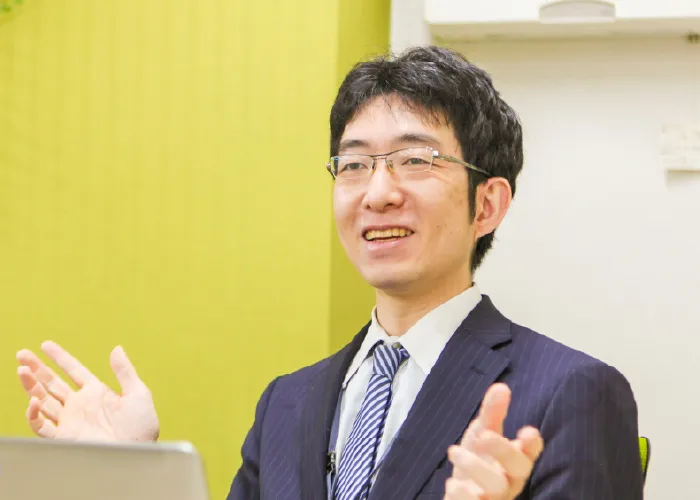
Dr. Yusuke Taguchi
[Area of expertise]
Sociology
Accumulated transfer exam data from various universities
Information on past examinations is not widely available, making it difficult to study on your own for transfer examinations. The Transfer Center has accumulated information on the transfer examinations of various universities over the years. Based on past data, guidance tailored to the year's trends will lead directly to success.
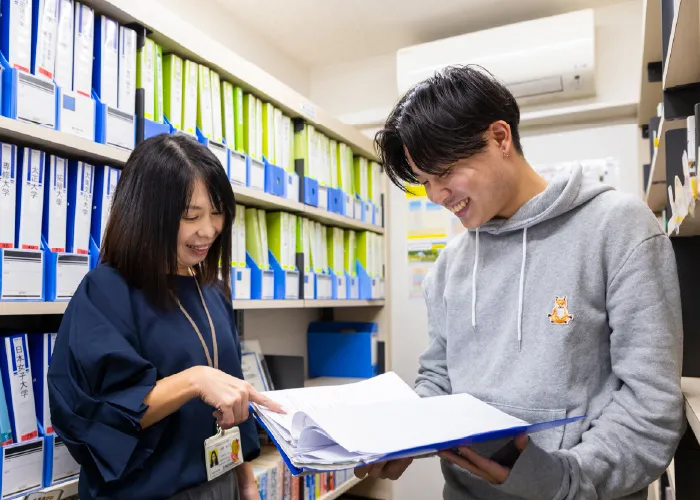
I can do my best because I am not alone!
A full range of university transfer courses
In addition to regular classes, we offer a number of specialized courses (for a fee) to prepare students for university transfer entrance examinations by academic subject or theme.
Specialized subjects and essays, which are difficult to prepare for on your own, will be thoroughly supported by lecturers for each academic subject. Students can maintain high motivation by studying with classmates who are working toward the same goal.
Two-Year Flow
First year-
[1st semester]
- Transfer guidance for new students
- Kanda University of International Studies Information Session on the On-Campus Selection Examination for Transfer Students
-
[Summer vacation]
- Kanda University of International Studies Tour
-
[Second semester.]
- 1st Transfer Course Course (fee-based)
-
[3rd trimester.]
- Second term: Transfer course lecture (fee required)
- Transfer Preparation Course (elective required)
-
[Spring vacation]
- Spring Transfer Course (fee required)
-
[1st semester]
- Spring Transfer Course (fee required)
- Kanda University of International Studies Tour
- Kanda University of International Studies, Intramural Selection Examination for Transfer Students (1st Term)
-
[Summer vacation]
- Summer Transfer Course (fee required)
- Kanda University of International Studies, Intramural Selection Examination for Transfer Students (1st Term)
-
[Second semester.]
- Kanda University of International Studies, Intramural Selection Examination for Transfer Students (2nd Term)
- University transfer application season (peaks from September to November)
-
[3rd semester].
- Debriefing for Successful Candidates
- Kanda University of International Studies, Intramural Selection Examination for Transfer Students (2nd Term)
Thorough support from deciding on the university of your choice to
correcting your statement of purpose and
interview preparation
We welcome those who want to transfer but don't know where to start.
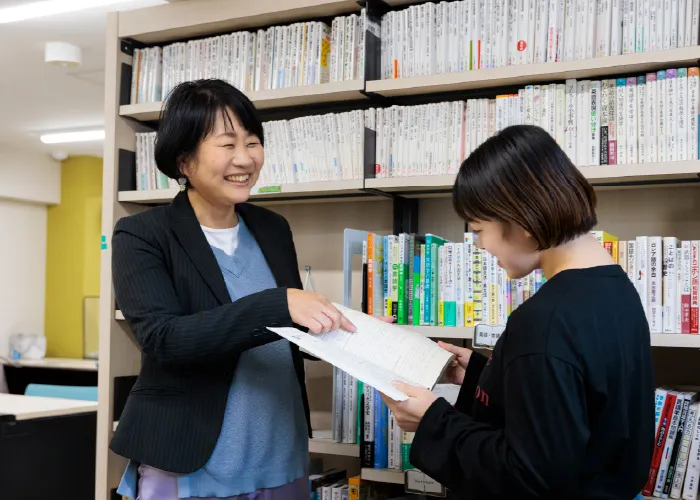
The staff at the Transfer Center is always ready to provide warm support, from consultation on the university of your choice to correction of your statement of purpose and preparation for interviews.
English skills that are important for transfer exams can be acquired in
regular classes.
Many universities conduct English examinations or use TOEIC® scores in their application requirements for transfer students.
Classes at Kanda Institute of Languages, where you can efficiently improve your four English skills, are an effective test preparation tool.
PICK UP
Junior college concurrent enrollment system
By concurrently enrolling in the correspondence course at Jiyugaoka Sanno Junior College or Aichi Sangyo University Junior College, students can obtain both a professional and a junior college degree upon graduation, and have a wider choice of universities to which they can transfer. In terms of tuition fees, it is also more economical than attending a junior college.
Universities that can be applied to by taking junior college courses (excerpts):
Kobe University, Yokohama National University, Sophia University, International Christian University, Meiji University, Chuo University, Meiji Gakuin University, etc.
Jiyugaoka Sanno Junior College
By concurrently enrolling in the correspondence course at Jiyugaoka Sanno Junior College, students can obtain both a professional and a junior college degree upon graduation.
This will increase the number of universities to which you can transfer and broaden your career choices. Tuition fees are also more economical compared to attending a junior college.
TRANSFER
Transfer to Kanda University of Foreign Studies (Faculty of Foreign Languages)
There is a "3rd year transfer system" that allows students to graduate from both Kanda Institute of Foreign Languages and Kanda University of Foreign Languages in 4 years and obtain a Bachelor's degree and a Specialist degree, a "2nd year transfer system" that allows students to take long-term study abroad and teaching courses, and "1st year recommended admission" that allows students to enter all departments and majors in the School of Foreign Languages.
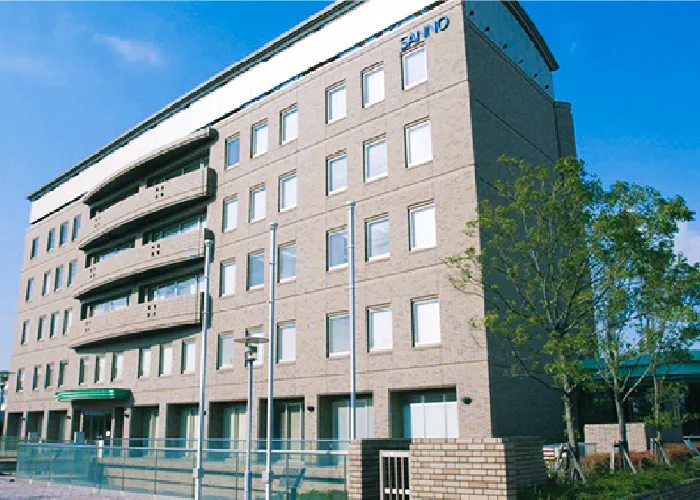
Kanda Institute of Foreign Languages is the only vocational school that allows students to transfer to Kanda University of Foreign Languages
.
The "3rd Year Transfer" allows students to graduate from both Kanda Institute of Foreign Languages and Kanda University of Foreign Languages in 4 years and obtain a Bachelor's degree, the "2nd Year Transfer" allows students to use the long-term study abroad program and take a teaching course (to obtain a teaching license for junior or senior high school), and the "1st Year Recommended Admission" allows students to enter any department and major in the School of Foreign Languages. The "Second Year Transfer" allows students to take advantage of the long-term study abroad system and to take a teaching course (middle and high school teaching certificate).
-
FEATURE 01

Transfer Admission Capacity
Approx. 100 persons
-
FEATURE 02

matriculation fee
Exemption of approx. 200,000 yen
-
FEATURE 03

Transfer Student Selection Examination
3 times a year




Capacity of approximately 100 people
The maximum number of transfer students accepted is approximately 100.
Your English proficiency, grades, and attendance will also be evaluated.
Selection examinations twice a year
There are two transfer exams per year, one in May and the other in September.
Admission Fee Waiver System
Graduates of Kanda Institute of Languages or those who have completed their first year of study are exempt from the 200,000 yen entrance fee for Kanda University of International Studies.
First Year Admission with Recommendation
Upon completion of the first year at Kanda Institute of Languages or upon graduation, students will enter the first year of the Faculty of Foreign Languages (all departments) at Kanda University of International Studies.
Transfer Admissions Overview
Third-year transfer system
Department of English and American Languages
- Capacity: Approximately 40 people
- Subjects: 2nd year students of all departments
- Selection method: English qualification, Japanese essay, interview (English and Japanese), attendance, grades at Kanda Institute of Languages
Department of International Communication, International Communication
- Capacity: Approx. 20 people
- Subjects: 2nd year students of all departments
- Selection method: English qualification, Japanese essay, interview (English and Japanese), attendance, grades at Kanda Institute of Languages
Department of International Communication, International Business Career Major
- Capacity: A few people
- Applicable departments: 2nd year students of International Business Career Course (separate application requirements apply)
- Selection method: English qualification, Japanese essay, interview (English and Japanese), attendance, grades at Kanda Institute of Languages
Department of Asian Languages
- Capacity: A few people
- Department: Department of Asian/European Languages Chinese, Korean, Indonesian, Vietnamese, Thai 2nd year students in each course
* Transfer to the same language as your major course. - Selection method: English qualification, certification in each major language, Japanese essay, interview (English, major language, Japanese), attendance, grades at Kanda Institute of Languages (special emphasis on grades in the major language).
Department of Ibero-American Languages, Department of Spanish
- Capacity: 8 persons
- Subjects: 2nd year students of the Spanish course in the Department of Asian and European Languages
- Selection method: English qualification, major language proficiency test, Japanese essay, interview (English, major language, Japanese), attendance, grades at Kanda Institute of Languages (special emphasis on grades in the major language).
Second Year Transfer System
Department of English and American Languages
- Capacity: Approx. 20 people
- Subjects: 2nd year students of all departments
- Selection method: English qualification, Japanese essay, interview (English and Japanese), attendance, grades at Kanda Institute of Languages
Department of International Communication, International Communication
- Capacity: Approx. 10 people
- Subjects: 2nd year students of all departments
- Selection method: English qualification, Japanese essay, interview (English and Japanese), attendance, grades at Kanda Institute of Languages
Department of International Communication, International Business Career Major
- Capacity: Approx. 5 persons
- Subjects: 2nd year students of all departments
- Selection method: English qualification, Japanese essay, interview (English and Japanese), attendance, grades at Kanda Institute of Languages
First Year Admission with Recommendation
All departments and majors
- Capacity: A few people
- Subjects: Sophomores and freshmen of all departments
- Selection method: English qualification, Japanese essay, interview (English and Japanese), attendance, grades at Kanda Institute of Languages
INTERVIEW
If I had continued on to university,
I am sure that my TOEIC® 950 score and long-term study abroad would not have been possible.
My life definitely changed at Kanda Institute of Languages.

English major, March 2022 graduation from Ageo-Takanodai High School, Saitama
Daichi Takagi
Kanda University of International Studies, Faculty of Foreign Languages
Department of International Communication
Department of International Communication
Second Year Transfer

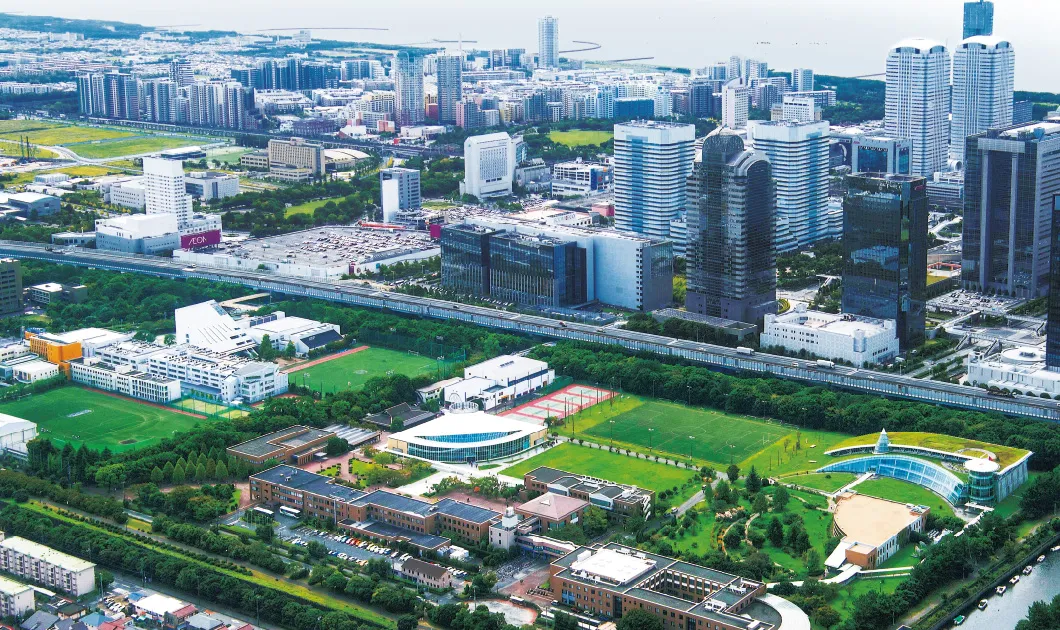
Our sister school, Kanda University of International Studies, is a four-year university located in Makuhari, an international city in Chiba Prefecture. Its educational goal is to nurture individuals who understand the "languages and cultures" of the world and who can contribute as members of the international community. About half of the full-time faculty members are non-Japanese, and the university is known for its participatory and practical classes that emphasize presentations. Students study English in all faculties, deepening their understanding of different cultures based on language and acquiring a broad perspective and international education.
Kanda University of International StudiesDomestic University Transfer Acceptances
*Accepted graduates for the past 5 years, some excerpts
Public universities】
Akita University, Ibaraki University, Iwate University, Ehime University, Osaka University, Osaka Public University, Ochanomizu University, Kagawa University, Kanazawa University, Kobe University, Gunma University, Saitama University, Shiga University, Shizuoka University, Shinshu University, Takasaki University of Economics, Chiba University, University of Tsukuba, Tsuru Bunka University, Tokyo University of Foreign Studies, Nagano University, Nagano Prefectural University, Nagano Prefectural University, etc. University, Nagoya University, Nara Women's University, Hiroshima University, Fukushima University, Mie University, Yamagata University, University of Yamanashi Prefecture, etc.
[Private universities]
Aoyama Gakuin University, Asia University, Atomi University, Oberlin University, Otsuma Women's University, Kanagawa University, Kansai University, Kansai Gaidai University, Kanto Gakuin University, Kanda University of International Studies, Kyoto University of Foreign Studies, Kyoto Sangyo University, Kyoritsu Women's University, Kinki University, International Christian University, International Fashion Professional University, Kokushikan University, Komazawa University, Jissen Women's University, Seisen Women's University, Sacred Heart University, Seitoku University, Senshu University, Taisho University, Daito Bunka University, Takushoku University, Chuo University, Teikyo University, Tokai University, Tokyo International University, Tokyo Woman's University, Toyo University, Doshisha University, Dokkyo University, Nanzan University, Nihon University, Ferris University, Bunkyo University, Hosei University, Hokkai-Gakuen University, Musashi University, Musashino University, Meiji Gakuin University, Mejiro University, Ritsumeikan Asia Pacific University, Reitaku University, Waseda University, etc.